What the Botanist Saw
JR Fenn
One night, decades after her safe return, she comes across her name in an encyclopedia. Hers hadn’t been the first commercial Moon landing; it was only a footnote in the record of lunar walks that served as a prelude to the first colony. She runs her fingers underneath the words—the first botanist on the Moon—the tablet’s milky glow the only illumination in her living quarters, perched on the eleventh story of her building that sits far above the sea.
Look, her son had said when he’d led her to the window, gesturing to the western view of the bay ringed by its cleansing lungs, their white tips glittering in the distance, It’s a view fit for a hero. The shores of the bay still give her a thrill of delight—green and tangled, a bank of trees all along the water, barely visible now in the dark—she’s proud of what she’s accomplished on Earth.
But he was too solicitous, too watchful, his usual cheerful bursts of chatter stilled as he showed her the kitchen, the garbage disposal, as if she could hardly think for herself. She never thought she’d go to one of these memory care facilities, the residents each sequestered in their own quarters, meeting up in the cafeteria for cards, their visitors’ voices breaking out once or twice a year in the carpeted hallways.
She doesn’t recognize the words of the encyclopedia article—Eclipsed from public view. Singular research interests. Reclusive. Isolated in her later years. She looks out into the night. Why had the program sent a botanist into space? Why had they funded her arrival on such inhospitable ground? The pale of the surface stretching before her to where the horizon curved out of sight, the dark rims of the craters and the softness of powder drifting up from each step of her boots—she could never, afterwards, forget the unfiltered starlight that struck her face, her own arm rising, unanchored, to shelter her eyes. A pure white body without vegetation—she’d witnessed the surface of the moon and to her it felt empty, a whistling, vast nothingness which scared her so completely it recalled her son’s newborn terror at flinging out his arms and encountering a groundless void.
Her apartment is silent. Where is he now? Listening to fado with his friends on a rooftop, or swimming in a saltwater pool, his skinny body cutting those perfect, wakeless lines through the water between the lane buoys. Didn’t he marry, she thinks to herself. Part of her recalls a civil ceremony, papers rustling in the heat, a sachet of birdseed in her hand, the dusky-sweet scent of sunflowers. And she can recall, too, a photograph of a hazy field, her son strolling away with his head bent down over a child strapped to his chest, exactly the way she used to carry him in the soft tummy pack. She picks up her phone. She misses his presence. She wants to say to him, How are you? She wants to say, I don’t recognize myself in these words.
He wouldn’t want the intrusion, she’s sure of it. She puts her phone back down. I’m proud of you, Mom, he’d said over dinner, the candles illuminating his craggy, grown-up face.
The Moon will never support the biomass adequate to sustain human caloric loads, she’d dispatched to head communications from her return capsule pod. A few minutes later, the capsule screen had brightened. Mama! her son had written, his wobbly letters crayon-pink. She could follow the movements of his stylus in real time via the satellite link as she sat strapped into the pod’s single seat. Hi sweetie! she wrote back. She’d missed those months of his childhood. Birthday parties, play dates. His kid hair sticking up, sweaty, his tiny punk-rocker attitude.
Out the capsule window, the Earth had appeared. Where the edge of the blue-green ball met the blackness of space, a glimmering of light hovered, a breathing envelope of atmosphere. She’d read about this—the overview effect—she’d seen the footage of the astronaut floating in one of the first spacecrafts, the video recording grainy and jumpy, the edge of the Earth bisecting the small window behind him, its curve so glowing and strange. We’re stardust, he’d said, his face flushed with awe, his words crackling and tinny. We came from the stars, and back to the stars we’ll go.
When she returned, she’d taken to holding her son’s hand, grasping so tight at his chubby fingers he’d pulled away. And her research had changed course—she poured all her energy into wildlife corridors, green pathways that spanned the continent from coast to coast. She could see the Moon more clearly after her trip, more intimately. She recognized its power. Like the tides, she said on the news, lunar magnetism influences the water table, the trickle of moisture up through the soil. This becomes more important in times of drought.
Where’s her phone? Slipped down in the couch, the crevices too deep to attempt a recovery this close to bedtime. On the balcony, the night flowers are blooming. She casts the tablet aside, gets up, shuffles to the door, slides it open, steps out. The perfume of the flowers rises to her nose. At sea, beyond the lungs, a ship passes in the dark, its lights blinking. She tests the flowerpot for moisture. The soil smells of mycelia, of decayed plants and animals, minerals, water, oxygen. Heaviness pulls her bones and muscles downward, but she remains standing—grateful for being underneath that moon rather than on it, for the bright green line that’s turning, fading already from her memory, for the taste of the soil as she brings it to her mouth and breathes through it, never loosed from gravity again.
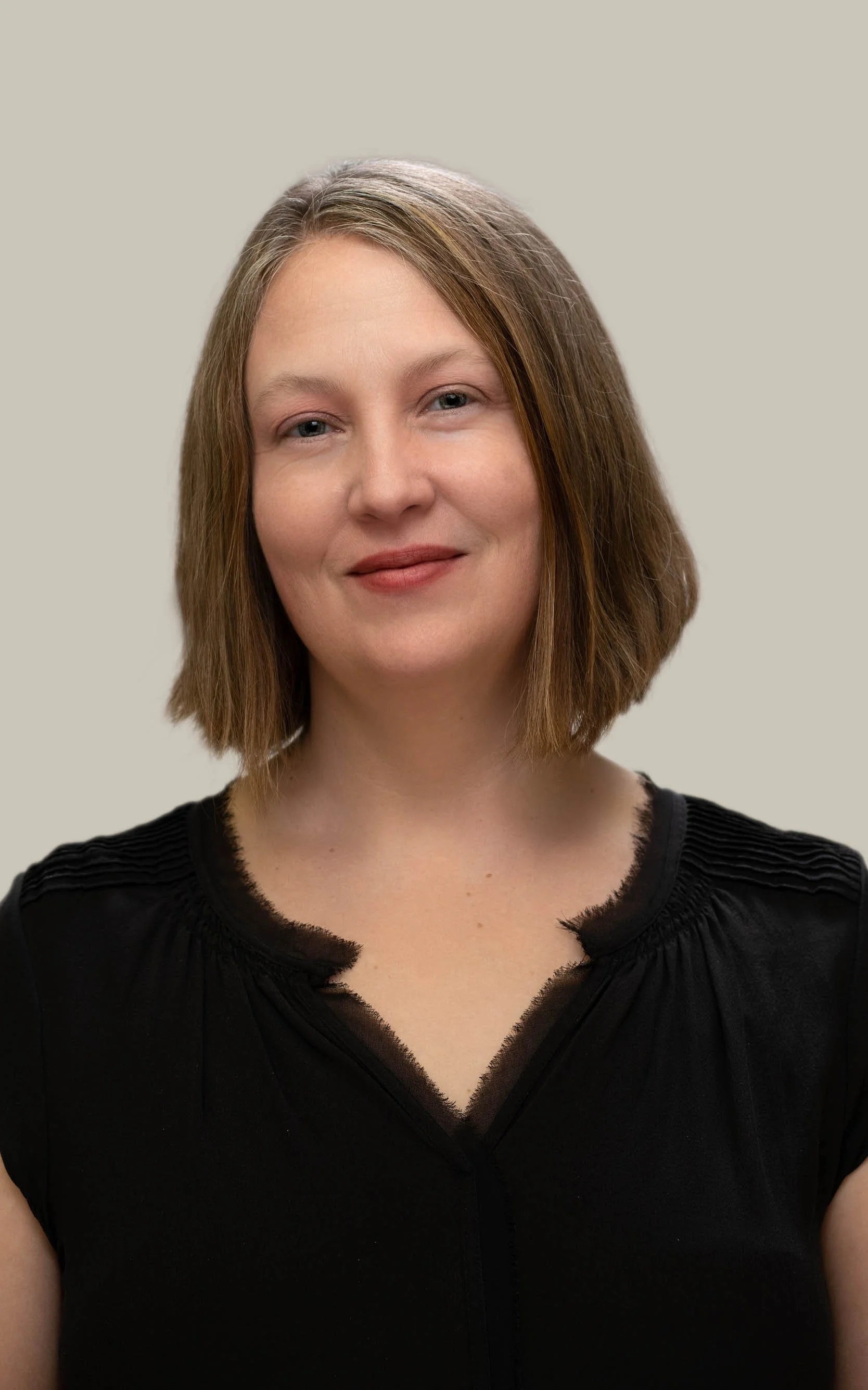
JR Fenn is a multi-genre writer whose work has appeared in Boston
Review, Witness, Gulf Coast, and more. Her fiction chapbook, Tiny
Vessels, won The 2024 Masters Review Chapbook Open and is now
available from B&N, Bookshop, etc. Recognitions include the New
Millennium Award for Flash Fiction, Pushcart and Best Small
Fictions nominations, and appearances in the Bath, Bristol, and
Oxford Award Anthologies. Her writing has been supported by
Ucross, Orion, Writing by Writers, and the Key West Literary
Seminar, among other places. She teaches Fiction and
Environmental Writing at SUNY College of Environmental Science
and Forestry and lives in Western New York with her family. Read
more at www.jrfenn.com.