Turkey Jesus
Colin Alexander
The asphalt road, poured over tamped-down earth and gravel, showed great black seams of tar from being resealed after winter rains. Should have been ten feet across, wide enough for a single car to travel, but its edges tumbling down the hillside carved it down to nine. Navigating the twisting, oak-lined street was difficult in daylight, near impossible at night. Daybreak streamed through spiked oakleaves, with broken chasms of white gravel like fat under torn skin. The hillside, littered with weeds and edged with overflowing rosemary, steamed with mist.
Isolde had stopped mid-walk. The road was blocked by wild turkeys circling counter-clockwise beak to tailfeather dragging the hollow tips of their wings along the asphalt, filling the crisp air with an eerie, rattlesnake hum.
Burned every decade, the protected forestland of the Oakland Hills scraped a dense metropolis below, pressure like tectonic plates, and animals reacted in tremored, fractured ways–she’d lived in the Oakland Hills long enough to see animals do weird shit. Raccoons drunk off rotting fruit, rutting on roofs; aggressive spikes tumbling down the hillside ass over teakettle with horns interlaced; coyotes crying like lost children.
She’d become most enmeshed with the eccentricities of turkeys, particularly the fat, limping tom locals called “Turkey Jesus” who was fat because it was considered lucky to feed him. Isolde saved all the crusts cut off Millie’s bread, setting Turkey Jesus’s portion beside the giant oak sprouting through the center of their suspended porch, raised along the hillside by giant beams. Turkey Jesus limped because according to locals he’d been struck by cars whizzing down serpentine roads no less than a dozen times, yet still managed to raise his puckered head every morning, never missing his rounds for daily bread.
“Probably fathered half the flock,” said Isolde’s neighbor, Jim, tossing bits of pared vegetables to Turkey Jesus and his puffed-up disciples.
Isolde was able to walk most mornings because Millie, far too old to still have crusts removed, her lungs echoing chasms of crepe paper, rarely rose before ten. Millie seldom made it out of the house, usually choosing to draw the turkeys from their street-facing window in intricate colored pencil. When she made it out, her incentive was finding lush black-and-copper turkey feathers for her collection, kept in an old coffee cup beside her bed.
Isolde knew the birds well enough to name Turkey Jesus’ followers–Peter (missing a talon), Paul (tail feathers giving the appearance of a broken-down windmill), etc. The disciples circled the street. Others in their flock perched atop nearby houses and were cast in shadow by the rising sun.
Their dark outlines gave the appearance of fat vultures, waiting for death to make them fatter.
She eyed the earthbound turkeys in their carousel, waiting for a familiar hitched step and wrinkled crown which never came.
Through the slight gaps between spinning hens and toms, Isolde caught sight of a limp body in the center of the ring. Even without his uneven gait, her breath caught.
Turkey Jesus.
How long did wild turkeys live? He’d been around since their move, long after Millie’s diagnosis, and even then he’d been a wizened fixture, a legend in the neighborhood. Millie had never had a dog, Isolde fearing allergies would exacerbate her condition, and the act of providing Turkey Jesus his daily bread had transubstantiated his flesh from wild animal to de-facto pet.
She’ll be devastated.
A gloriole of yellow-green light filled the circle, so bright Isolde blocked her face with an outstretched hand, and while the limp body in the center did not twitch or move, through the thin gaps between her fingers Isolde saw it rise with the morning mist.
Gravel crunched from around the tight corner. A horn blasting through the quiet, a pristine gray Land Rover barreling towards the turkeys.
Isolde gasped. The squeal of brakes and crack of impact; the car’s back wheels came off the ground. No angry squawking, no flurry of feathers. The hood of the car bent into a V like it had struck an invisible lamppost, the grill clattering to earth.
None of the turkeys gave ground. The birds turned in unison towards the vehicle, inching forward, scraping their feathers along the asphalt. From the center of the moving circle a pink, bald head jutted out, then a turkey leapt onto the car’s hood, scraping the shining metal like its talons were iron.
The driver doubled down on the horn as Turkey Jesus limped forward and darted at the windshield, once, twice. The Land Rover reversed course as its windscreen burst and shattered, frantically mashing into the hillside and overcorrecting, nearly tumbling over the opposite edge of the road. The turkeys on the nearby roofs followed suit, dive-bombing the car like dark avenging angels. Isolde noticed her neighbor Jim at his window, mouth agape, reminding her to shut her own.
Isolde inched forward. Stood in the center of the ring the turkeys had abandoned. At her feet was a pool of blood and eggshell, a white-tipped feather floating in its center.
Isolde picked up the feather, strangely heavy, and made her way back through the thinning mist to the in-law unit she shared with her daughter. The sun had overcome the hills, the sky losing its purple and orange aurora, leaving only bright blue and blinding white.
Inside, she considered the feather, hooks and barbules separated, soaked with blood.
She walked past the sink and into Mille’s room, where her daughter’s chest rose and fell between quiet coughs.
She touched the tip of the feather to her daughter’s chest like a wand, leaving a dark smear atop pink pajamas, praying to a broken bird for another miracle.
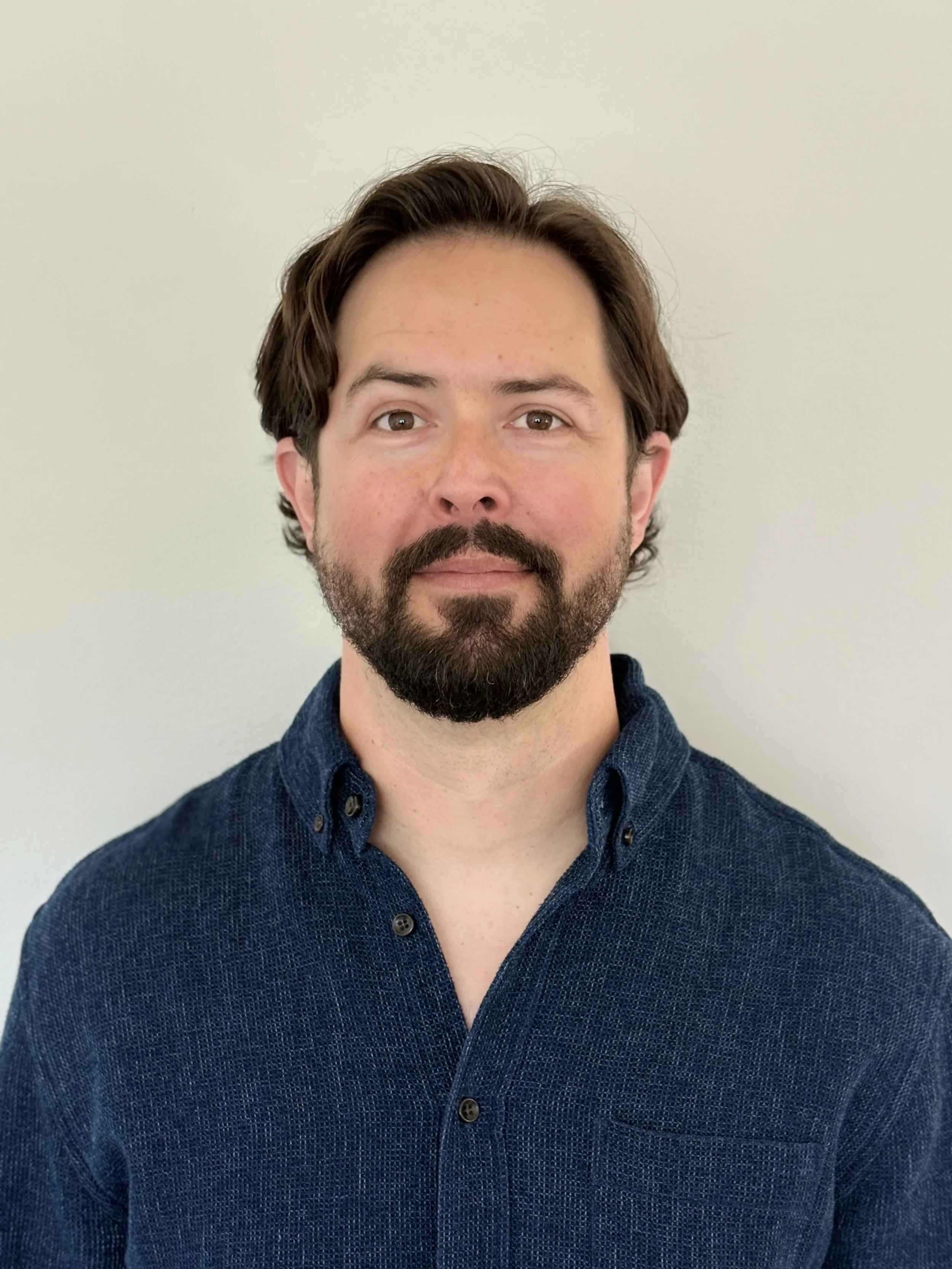
Colin Alexander lives in San Francisco with his wife and daughter. His work has been nominated for the Pushcart Prize, Best American Science Fiction and Fantasy, and Brave New Weird. His writing has been featured in Analog Magazine, Radon Journal, The Molotov Cocktail, and Rock and a Hard Place, with work upcoming in Phano. He’s purchased a website, Colincampbellalexander.com, and will surely build it someday, but not today. Feel free to click on it to see if he ever gets his act together. He can be found on Bluesky @colincalexander.bsky.social, and has an eco-horror novella, “Suicide Valley Trail Maintenance” out with Stanchion in June 2026.